Authenticité
Ce que « Laguiole » signifie réellement
Il y a une raison pour laquelle on nous pose souvent cette question. Voici la réponse honnête.
Le nom n'est pas une garantie, c'est le couteau qui doit l'être
« Laguiole » is the name of a village in the Aubrac, in the south of France, where a local cutler first shaped this knife in 1829. Unlike, say, Champagne or Parmigiano-Reggiano, the name « Laguiole » was never legally protected as a designation of origin. That means, legally, almost anyone anywhere can put a bee on a knife and call it a Laguiole, regardless of where it was actually made.
We think that’s worth saying out loud, because it’s the reason « authentic » gets thrown around so loosely in this category, and why it’s easy for a shopper to end up unsure what they’re actually paying for.
Ce que nous entendons par authentique
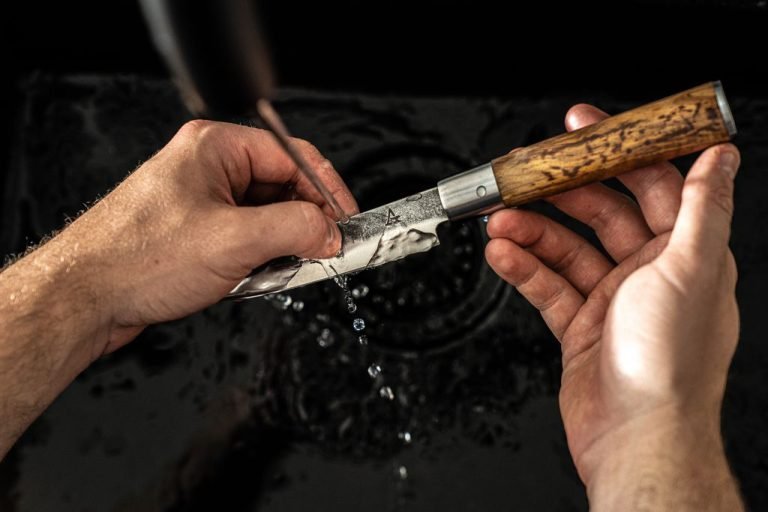
Pour nous, l'authenticité ne se résume pas à un nom gravé sur une lame. Elle repose sur trois éléments dont nous pouvons réellement répondre :
- Le design — la forme, le mécanisme à ressort, les proportions : tout est fidèle au modèle 1829 d'origine, et non une copie simplifiée ou remaniée.
- The process — forged and finished by hand in France » or « forged in France. See our craftsmanship for the full process.
- Les matériaux — l'acier, le bois, la corne : clairement indiqués sur chaque fiche produit, sans se cacher derrière un langage marketing.